.svg)


.svg)




Introduction
Are you looking for the best GDPR-compliant event management tool to optimise your event processes, save valuable time, and gain greater control over your events?
An event management software can help you reduce your workload, simplify your event workflows, and improve your event marketing through data analysis.
We are currently seeing strong global growth in demand for event management platforms. The European market offers numerous options, with each product having its own strengths and weaknesses.
To help you find the best event management software, we have analysed 10 European event software solutions. We outline which features GDPR-compliant software absolutely requires, what functions an event management software should offer, why European providers are often the better choice for many organisations, and provide a detailed comparison to find the most suitable solution for your organisation.
Which features does GDPR-compliant software absolutely require?
Anyone processing personal data must ensure that the software used supports the requirements of the EU General Data Protection Regulation. This is not only about security, but also about transparency, control and traceable processes.
The most important core features include clean role and permission management. Employees should only be able to access the data they actually need. Complementing this is an audit log, so that it remains traceable who accessed, edited or exported data and when.
Equally central is functional consent management. The software should be able to document when and for what purpose a person has given their consent, and should equally enable easy withdrawal. This is indispensable, particularly for marketing, newsletters or RSVP processes.
Another mandatory area covers features for implementing data subject rights. Users must, for example, be able to obtain information about stored data, have data corrected or request its deletion. Modern software should support these processes as simply and efficiently as possible.
Automatic deletion and retention rules also play an important role. Personal data may not be stored indefinitely. The software should therefore be able to manage deadlines, archiving or anonymisation in an automated fashion.
To this are added technical security measures such as encryption, access controls, backups and, ideally, multi-factor authentication. Cloud solutions in particular should also offer transparency about data locations, sub-processors and data processing agreements. Server locations in the EU or Switzerland can facilitate data processing in compliance with data protection regulations and, depending on the provider, reduce the complexity of international data transfers.
For providers of event software or an event management tool, additional requirements often apply, as a particularly large amount of personal data is processed here, such as attendee lists, check-ins, communication data or photo consent. Flexible privacy features and clear processes are correspondingly important.
It is important to note, however: no software is automatically GDPR-compliant. What is decisive is always the interplay of technology, processes and correct usage within the organisation.
Why are GDPR-compliant providers often the better choice for many organisations?
When choosing an event management platform or other business software, organisations today no longer look only at features and price. Topics such as data protection, support quality and regulatory requirements are playing an increasingly important role. This is precisely where European providers often offer decisive advantages over US solutions.
A central point is data storage in Europe or Switzerland. Many European providers store personal data exclusively within European data centres or in Switzerland. This makes it easier to fulfil the requirements of the EU General Data Protection Regulation, particularly for sensitive attendee data, RSVP information or payment data.
Added to this is native multilingualism. European platforms are often designed from the outset for multiple languages and markets. This applies not only to the user interface, but also to emails, registration processes, invoices or attendee communications. This is a major advantage, particularly for international events within Europe.
Differences are also frequently apparent in support. European providers offer support within similar time zones and often directly in the required local languages. This allows problems to be resolved more quickly and coordination to be carried out more efficiently, especially for time-critical events.
Another important factor is GDPR compliance. European providers typically develop their software with European data protection requirements in mind from the outset. Features such as consent management, deletion deadlines, data exports or data processing agreements are therefore often better integrated and more practical in their implementation.
Particularly relevant for paid events are also European VAT rates. European event software often supports country-specific tax logic, different VAT rates and legally compliant invoicing within Europe considerably better. This reduces manual effort and minimises tax risks for international events.
For companies, associations and public authorities in Europe, choosing a European provider can therefore not only make sense from a data protection perspective, but can also significantly reduce operational workload on a day-to-day basis.
How is event management software selected?
According to Gartner, software selection today is generally far more structured and data-driven than it used to be. Organisations typically begin with an initial shortlist of several providers, where reputation, previous experience and recommendations play an important role. The shortlist is then refined through intensive research, customer reviews and testimonials, as many buyers later adjust their original list. During the evaluation phase, organisations compare event software through demos, trial versions and discussions with providers, often over a period of several months. Not only the platform’s features matter, but also support quality, ease of use, security, transparent pricing and expected business outcomes. Many organisations pay particular attention to whether the solution delivers measurable value and whether adoption within the team works smoothly, in order to avoid poor decisions later. Successful providers therefore convince not only through their technology, but above all through how well a platform supports the concrete goals and processes of the organisation.
It is important when selecting a platform to assess your own use cases. Events vary widely, and depending on whether you are running conferences, employee events, customer events, networking events or training sessions, there are specific requirements for a platform.
What features and characteristics should event management software offer?
The most popular features of event management software are:
- Guest management
- Event registration
- Ticketing
- Event website
- Agenda
- Email sending & push notifications
- Check-in
- Badge printing
- Surveys & polls
- Analytics & reporting
- Integrations
Ideally, therefore, the solution should cover the entire event planning process from A to Z. An event management platform should offer the following features:
Saving time through automation
Manual processes consume valuable resources. With a modern event management platform, registrations, ticket sales, announcements and check-in can be fully automated. The result: less effort, fewer errors and a seamless process from invitation to entry.
All event data in one place
A central platform consolidates attendee data, payment information, ticket categories, programme flows and feedback in a single location. This way, all event administrators always work with the same, up-to-date information.
Analytics for better decisions
What worked well? What can be improved next time? With integrated reporting and analytics functions, you can keep track of ticket sales, attendance rates for individual sessions and feedback evaluations at all times. This allows future events to be optimised based on data.
Personalisation and a consistent brand experience
From personalised email campaigns to a fully branded registration page: a good event management platform supports you as an event manager in marketing your event professionally.
Selection criteria and methodology
This comparison is based on a structured evaluation of ten European event management platforms, conducted between March and May 2026. As a Swiss provider with over ten years of market experience in the GDPR environment, we bring a well-founded understanding of the regulatory requirements that organisations across the DACH region and Europe navigate on a daily basis.
Sources
The rankings are based on verified user reviews from three sources: Google Business reviews, Capterra and G2. We prioritise Google reviews because they are publicly accessible, not hidden behind a login, and backed by Google's verification process. Where no meaningful Google score was available (fewer than 15 reviews), we drew on Capterra or G2 ratings instead. Platforms with fewer than 10 verified reviews in total were excluded from the ranking.
We assessed both positive and critical reviews in order to build a balanced picture. Reviews pointing to technical shortcomings, support quality issues, or weaknesses in GDPR implementation were weighted more heavily, as these are particularly relevant to purchasing decisions.
Criteria assessed
Each platform was evaluated against the following criteria:
Data protection and compliance: Server locations (EU or Switzerland), availability of a data processing agreement (DPA), and transparency regarding sub-processors.
Feature scope: Coverage of the full event lifecycle: registration, communication, check-in, ticketing, and reporting. Platforms covering only part of this lifecycle were ranked accordingly.
Ease of use: Setup effort, learning curve, and day-to-day usability for event teams without a technical background, based on user reviews.
Pricing structure: Transparency of pricing, scalability for organisations of different sizes, and cost model (annual licence, per-event, usage-based).
Support: Language availability, response times, and quality of customer support, based on verified user reviews.
Limitations of this comparison
No comparison is entirely neutral. As the provider of one of the platforms reviewed, we have a commercial interest in the outcome. We have therefore deliberately relied on external, verified review sources and defined our evaluation criteria in advance. Platforms for which no publicly available pricing or reviews existed at the time of analysis could only be assessed in a limited way — this is noted transparently in the relevant entries.
Software markets move quickly. Features, pricing, and certifications are subject to change. We update this comparison every six months and recommend verifying details directly with each provider before making a purchasing decision.
Last updated: October 2026
Event management software: comparison & evaluation
Below you will find a table with an overview of the platforms’ ratings and the most important criteria:
* Our ranking is based primarilyon verified Google reviews. Where no meaningful Google score is available,Capterra and G2 ratings were used.
Below you will find the 10options in detail, which we have reviewed taking into account the respectiveselection criteria.
The best GDPR-compliant all-in-one event management platforms
1. Oniva
Rating: ⭐⭐⭐⭐⭐ 4.9/5 (Google)
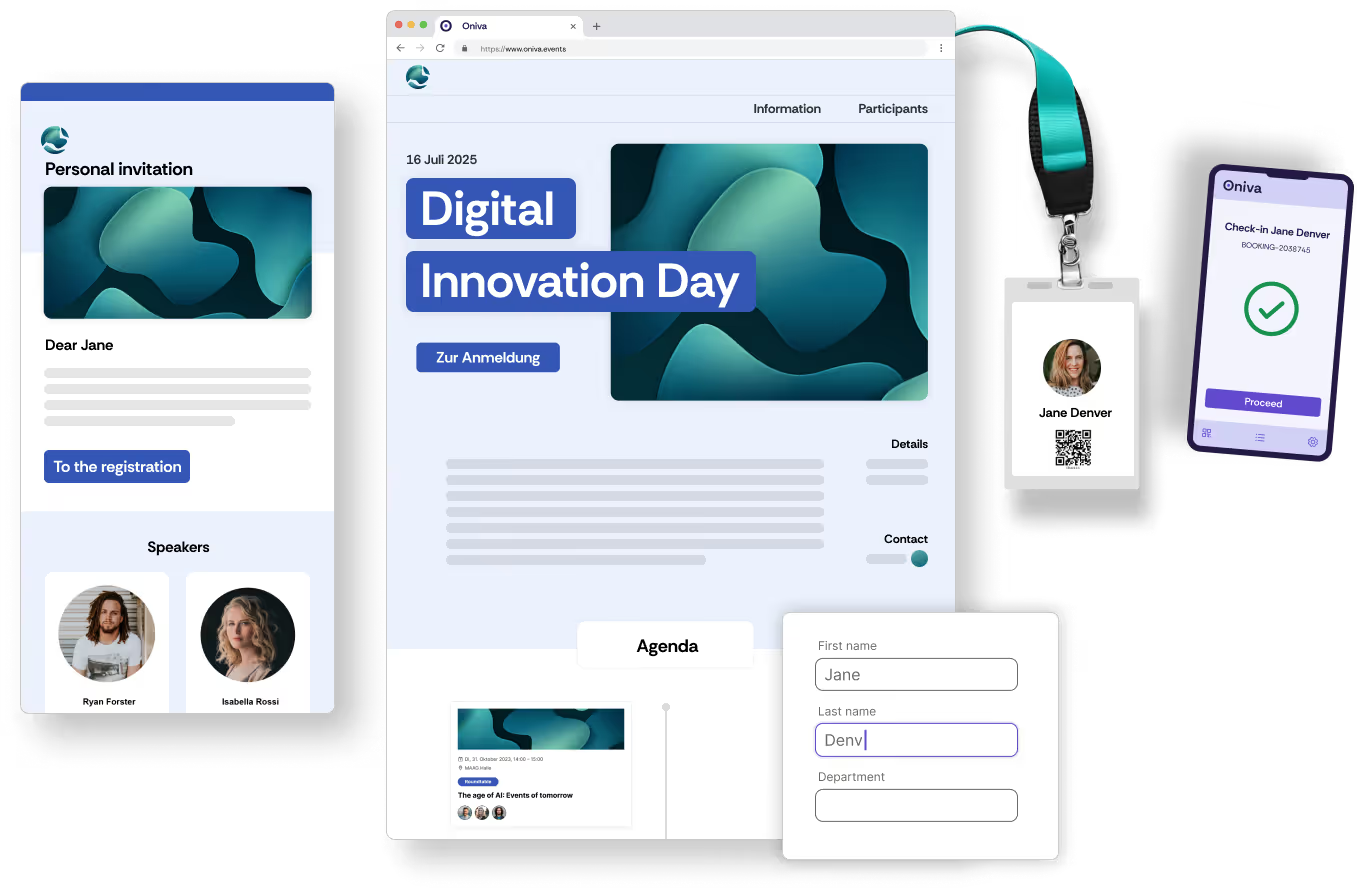
Summary: Oniva is the user-friendly all-in-one event management software for organisations, allowing event teams to centrally manage conferences, employee events, training sessions and VIP events. Oniva automates the entire event organisation process, from invitation to evaluation, and stores all data securely, transparently and in full GDPR compliance in Switzerland.
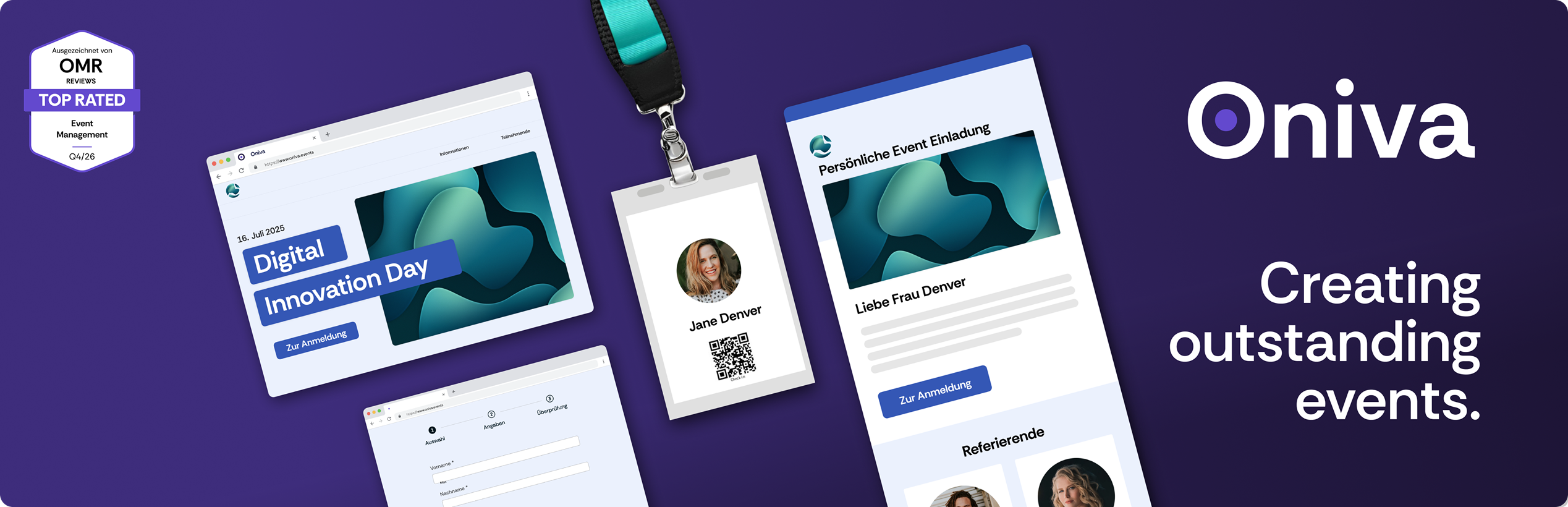
Oniva is an all-in-one event management platform covering the entire event lifecycle in a single tool – from the branded event website and registration through integrated ticketing, email communication and check-in to reporting and evaluation. The platform is suitable both for small organisations and for large organisations with individual enterprise requirements. It is fully compliant with GDPR and Swiss data protection law, stores all data encrypted exclusively in Switzerland and thus meets European security standards. With transparent licence pricing and included support in German, French and English, Oniva is the user-friendly GDPR-compliant solution for conferences, employee events, training sessions, marketing events and hybrid formats.
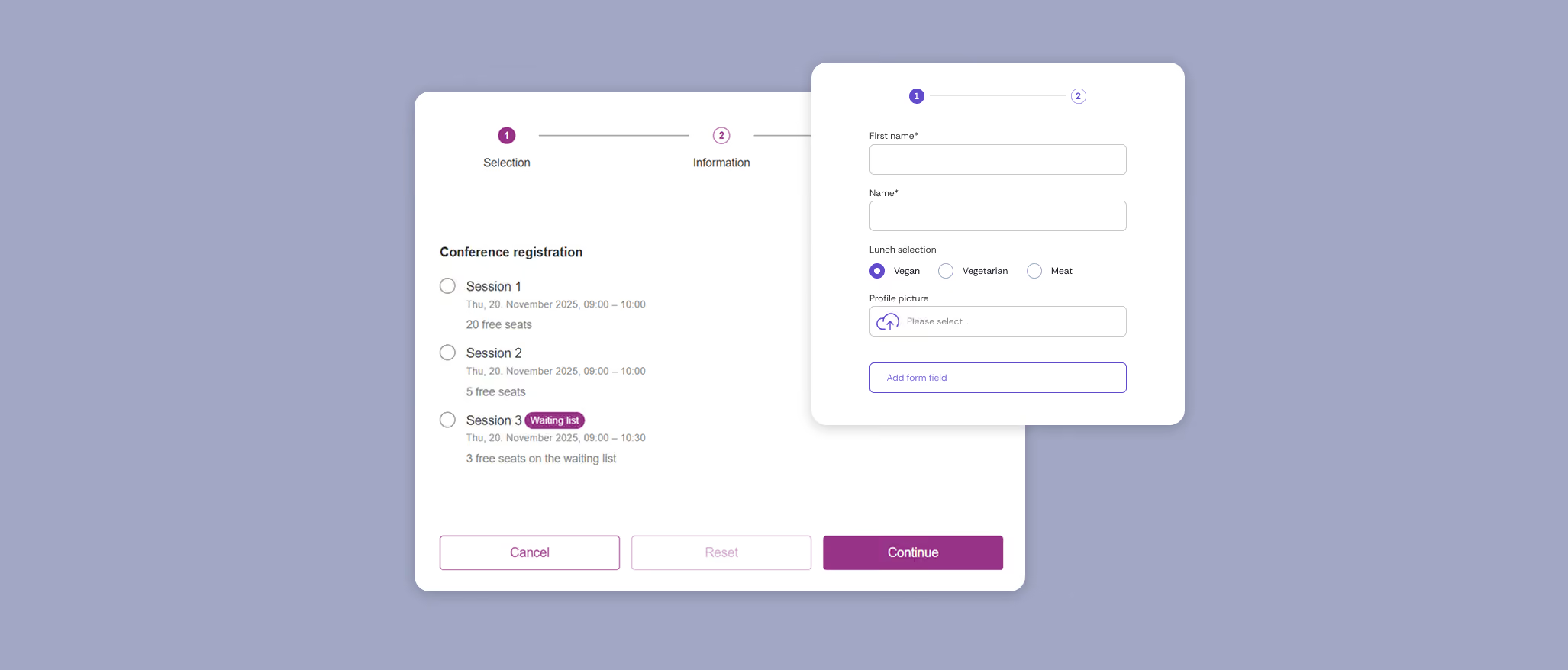
The very high registration flexibility allows organisations to map a wide variety of event types without needing to use multiple tools. In addition to quotas, automatic waitlists and different target groups, Oniva offers registration logic for both free and paid events.
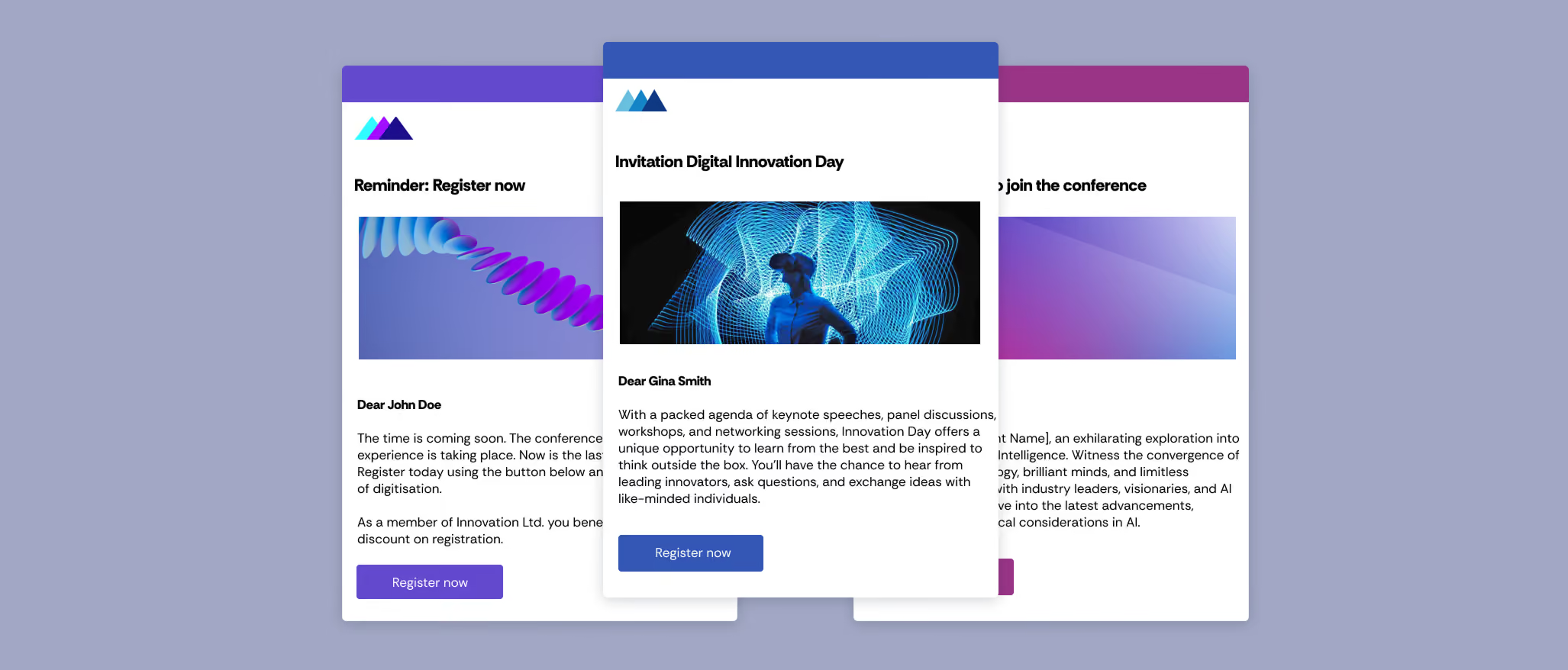
With the integrated campaign function, invitations, reminders and thank-you emails can be sent to the desired target audience, always with a focus on maximum email deliverability.
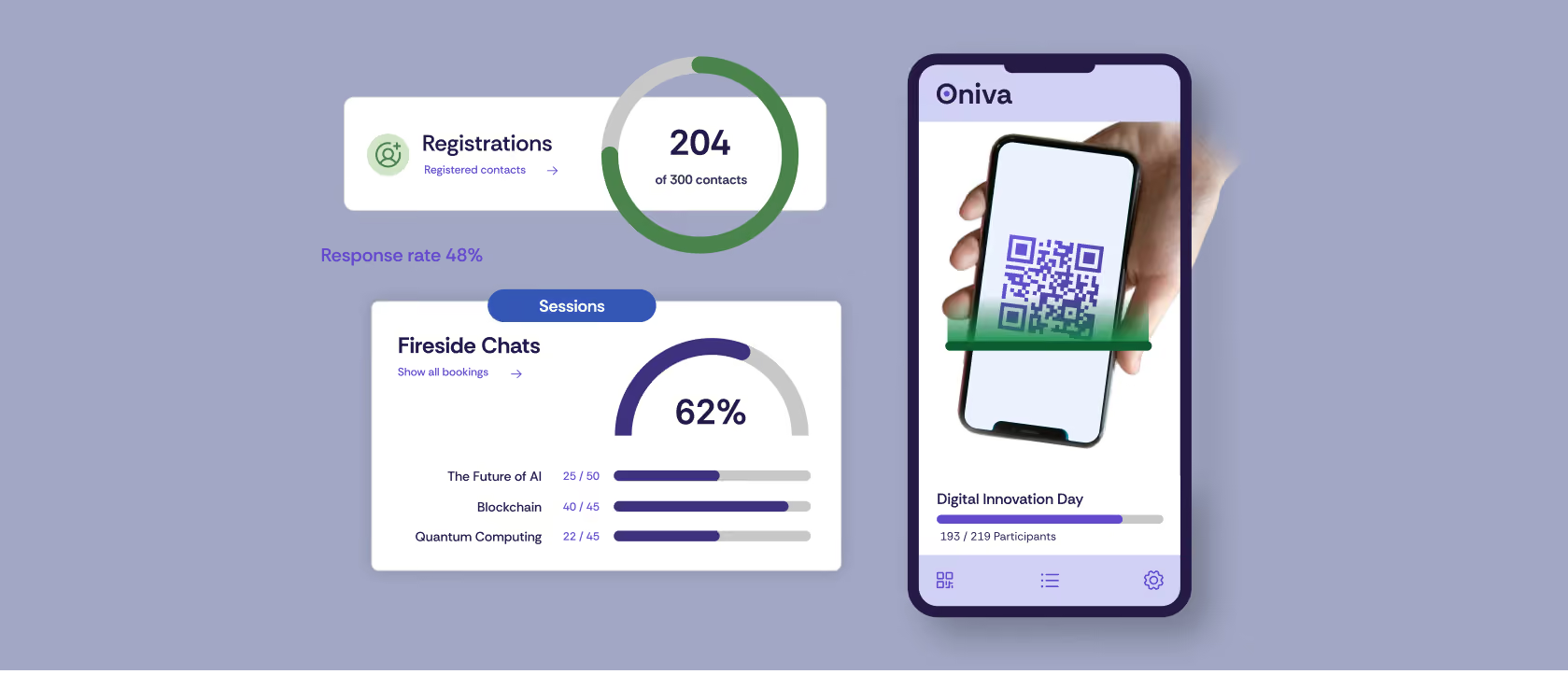
With Oniva’s event check-in app, waiting times can be reduced and the number of guests present can be monitored in real time, whether for 50 or 5,000 attendees. A seamlessly integrated badge printing function ensures straightforward labelling of guests. Integrated analytics provide valuable insights for optimising event marketing and create the foundation for measurable success and improvement.
Popular features:
- Event website builder
- Flexible registration logic
- Integrated ticketing including payment processing
- Check-in app
- Guest management
- Email communication
- Reporting dashboard
- HubSpot CRM integration
Strengths
Ease of use, highly flexible registration logic, very simple setup, strong security measures such as encrypted data storage in Switzerland.
Weaknesses
Primarily oriented towards business events, less suitable for large public events or festivals, no survey function.
Pricing
Freemium (free trial, 10 days); per-event licence from EUR 925 per event; annual licence from EUR 3,490 per year.
“ We are thrilled with the solution and its stability, and extremely satisfied with the support from the Oniva team. Many thanks – we’ll be happy to work with you again. “
Philippe Koller
Head of Audiovisual Technology, Swiss Radio and Television

2. LineUpr
Rating: ⭐⭐⭐⭐⭐ 4.8/5 (Capterra)
Summary: An affordable and quick-to-set-up solution for event apps, but not a full event management system. Registration, ticketing and payment processing are absent.

Image credit to Lineupr
LineUpr is a German, browser-based event app platform from Dresden that allows event organisers without technical knowledge to create a fully branded event app for in-person, hybrid and online events in a short time. The platform is GDPR-compliant with server location in Germany and offers features such as agenda management, live polls, push notifications, networking and attendee feedback – without attendees needing to download an app. Since LineUpr focuses exclusively on the event app experience, the platform is not suitable as a full event management system and must be combined with external tools for registration, ticketing and payment processing.
Popular features
- Event app (mobile-optimised)
- Live polls
- Networking
- Agenda display
- Push notifications
- Surveys
Strengths
Quick setup (within a single work session), transparent per-event pricing, no annual contract required.
Weaknesses
No full event management: no integrated ticketing, no registration, no payment processing; pure app solution requires additional tools.
Pricing
Per-event pricing model; from approximately €149 per event.
3. idloom
Rating: ⭐⭐⭐⭐⭐ 4.8/5 (Capterra)
Summary: idloom offers a broad feature set at transparent prices and without per-attendee fees. Some user reviews point to a lower ease of use and bugs in payment processing for larger events, which warrants caution for critical events.
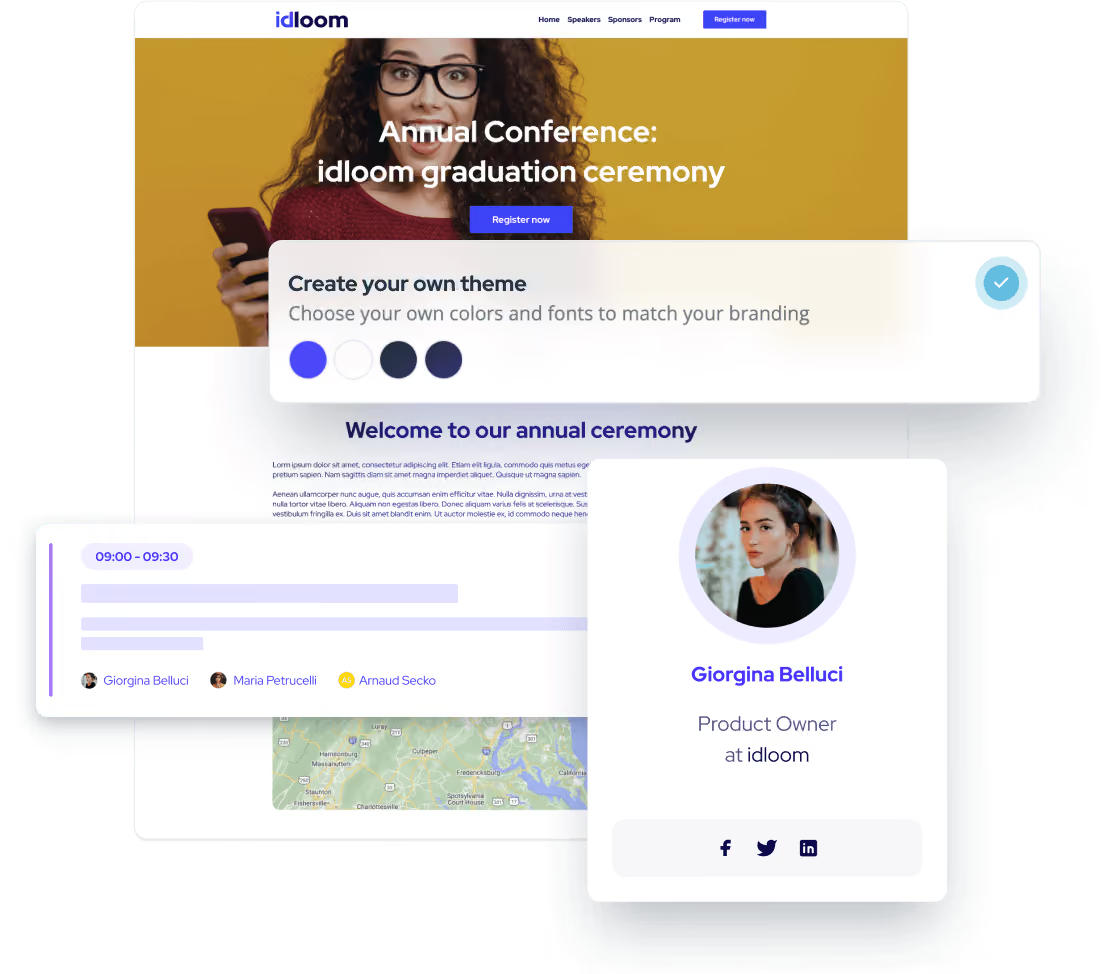
Image credit to idloom
idloom is a Belgian event management platform covering the entire event lifecycle – from registration and ticketing through payment processing to check-in and post-event follow-up. The software is ISO 27001-, SOC 2- and GDPR-compliant and is hosted on Google Cloud infrastructure in Belgium. With a freemium entry point from €25/month, no per-attendee fees and no minimum contract, idloom targets associations, educational institutions and the automotive industry.
Popular features
- Personalised event websites
- Multi-step registration flows
- QR code check-in
- Badge printing
- Automated e-tickets
- Payment processing (credit card, PayPal, bank transfer)
- API integrations
Strengths
No per-attendee fees, ISO 27001 + SOC 2 + GDPR, multi-step registration flows.
Weaknesses
Some user reviews report bugs in payment processing and attendee management for larger events; support response time occasionally rated as slow; interface takes some getting used to for new users.
Pricing
From EUR 1,800 per year for 1 event.
4. InviteDesk
Rating: ⭐⭐⭐⭐⭐ 4.7/5 (Capterra)
Summary: Strong at invitation management and sales-marketing collaboration, but not a full event management system. Additional tools are required for more comprehensive needs.

Image credit to InviteDesk
InviteDesk is a Belgian no-code event management platform specialising in invitation-driven B2B events, supporting marketing and sales teams in jointly managing guest lists, sending personalised invitations and tracking registrations in real time. The platform is ISO/IEC 27001:2022-certified, fully GDPR-compliant and hosted exclusively on EU servers – an advantage that makes InviteDesk particularly popular with companies with strict IT and compliance requirements, such as those in the finance and banking sector. Since the focus is clearly on invitation management and ROI reporting, InviteDesk is less suitable as a full event management system and requires additional tools for ticketing or more complex event formats.
Popular features
- Invitation management
- Collaborative guest lists
- Email sequences
- Real-time RSVP tracking
- Check-in app
Strengths
Intuitive interface, good support, strong collaboration features for marketing and sales.
Weaknesses
No full event management (e.g. no integrated ticketing), SaaS model limits individual customisations, primarily focused on B2B invitation management.
Pricing
From EUR 3,324 per year.
5. SpotMe
Rating: ⭐⭐⭐⭐⭐ 4.4/5 (Capterra)
Summary: A powerful enterprise solution designed primarily for large organisations in regulated industries. Generally oversized for small and medium-sized organisations.

Image credit to SpotMe
SpotMe is a Swiss enterprise event platform headquartered in Lausanne, majority-owned by Swiss Post since 2023, specialising in the delivery of in-person, hybrid and virtual events for large organisations in regulated industries. The platform is GDPR-, SOC 2 Type II- and ISO 27001-compliant and offers deep CRM integrations, including with Veeva for the life sciences sector, as well as real-time analytics data feeding directly into existing marketing and sales tools. Costs and contract terms are available on request only.
Popular features
- CRM integrations (Salesforce, Veeva)
- Compliance features
- Hybrid events
- Live polling
- Engagement analytics
Strengths
Strong CRM integration, high compliance standards met, enterprise-grade security.
Weaknesses
Some users have criticised its user-friendliness, complex onboarding, overly complex for standard business events.
Pricing
Pricing on request only.
6. Converve
Rating: ⭐⭐⭐⭐⭐ 4.7/5 (Capterra)
Summary: A specialist solution for B2B events with a matchmaking focus, but not a full event management system. Largely unsuitable for organisations without a B2B networking focus.
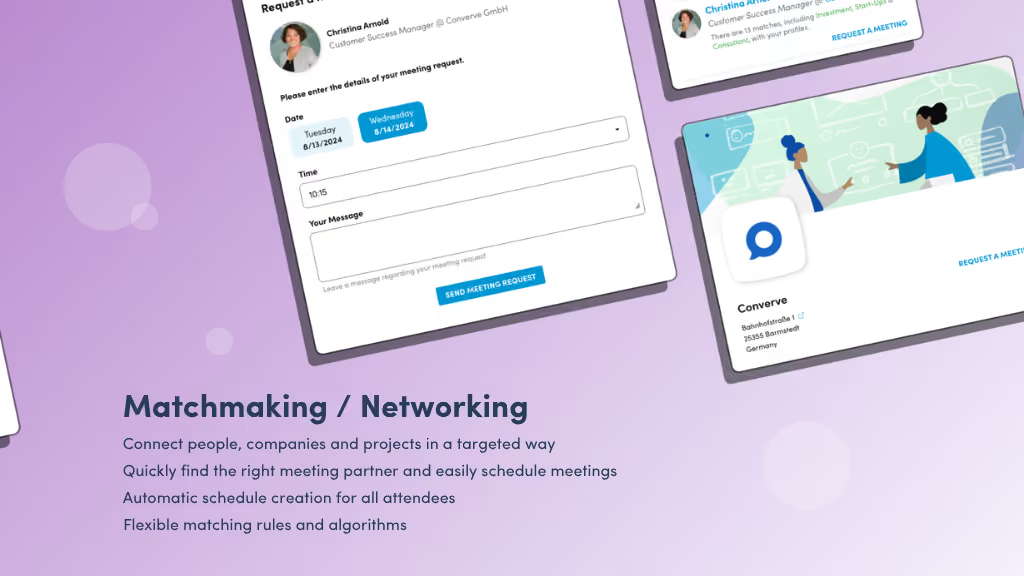
Image credit to Converve
Converve is a German event technology platform with over 20 years of experience, specialising in professional B2B networking events and offering organisers of trade shows, investor conferences, trade fairs and association events a highly configurable environment – from registration through AI-powered matchmaking to post-event analysis. The platform is ISO/IEC 27001:2022-certified and fully GDPR-compliant, with EU data storage and native multilingual support in six languages. Since Converve is consistently focused on structured 1:1 meetings and hosted buyer programmes, the platform is not suitable as a full event management system for general event formats. Ticketing, payment processing and classic guest management are not part of the core product.
Popular features
- AI-powered B2B matchmaking
- 1:1 meeting scheduling
- Hosted buyer workflows
- Mobile event app
- Multilingual interface
Strengths
B2B matchmaking, strong niche expertise, EU hosting, many years of experience.
Weaknesses
Very narrow use case (primarily B2B trade shows), no full event management, per-event pricing makes long-term planning difficult.
Pricing
Per-event pricing; quotes on request.
7. Sweap
Rating: ⭐⭐⭐⭐⭐ 4.7/5 (Capterra)
Summary: Sweap is primarily aimed at marketing teams who want to manage recurring events in a structured and automated manner. The platform impresses with clear processes and fast support, but is less suitable for organisations with very specific layout requirements.
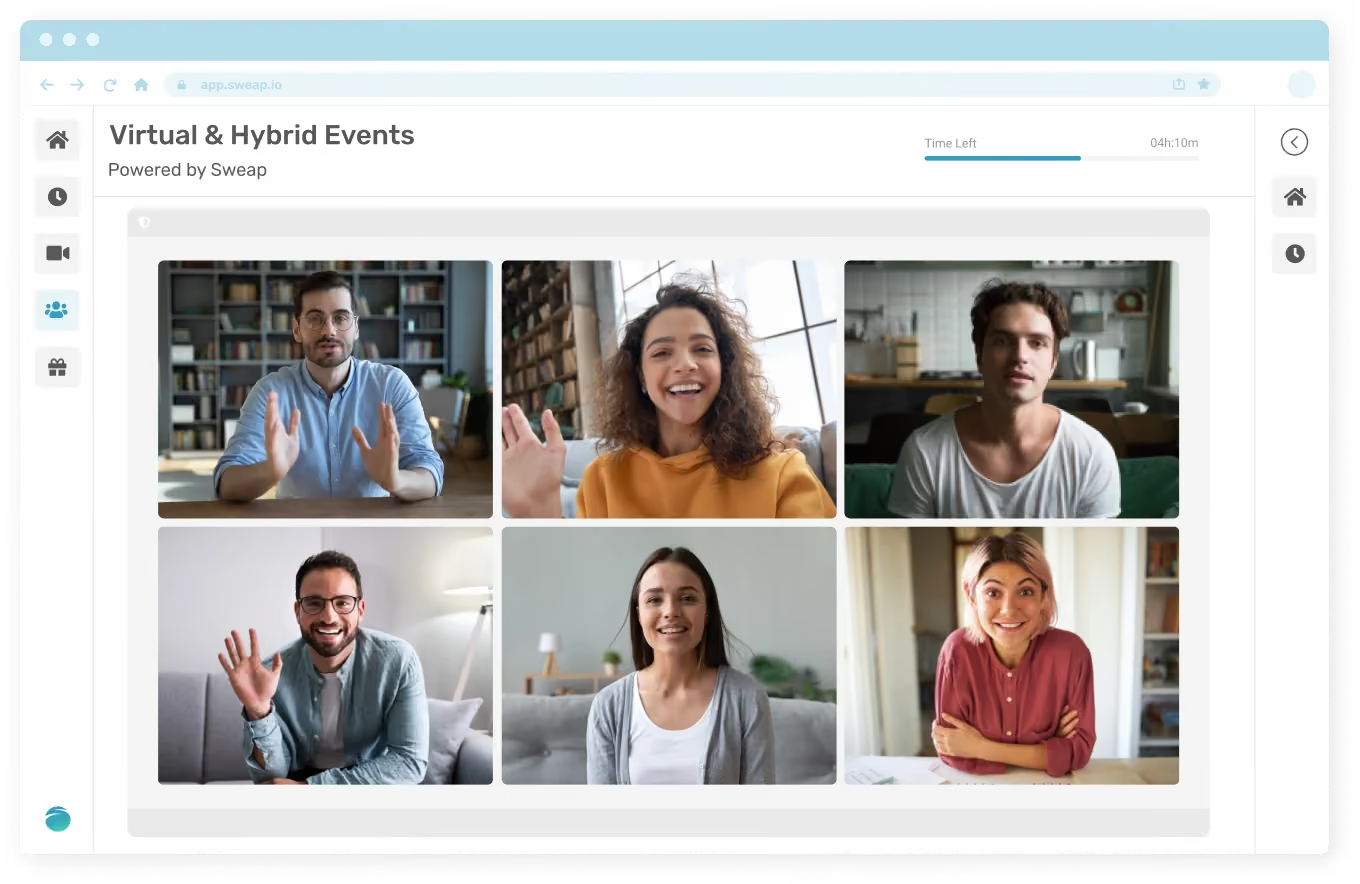
Image credit to Sweap
Sweap is a German cloud solution that automates guest management and supports event managers from planning through execution to evaluation, with features for registration, communication, ticketing, check-in and a virtual event platform. The software is 100% GDPR-compliant with server location in Germany and fully compliant with the European Accessibility Act (EAA).
Popular features
- Drag & drop registration pages
- Email automation, guest management
- Check-in app with QR code
- Badge printing
- Virtual event platform
Strengths
100% GDPR-compliant, server location in Germany; EAA-compliant (European Accessibility Act), responsive support according to user reviews.
Weaknesses
Limited layout flexibility for specific design requirements; primarily focused on invitation and guest management, less suitable for large trade shows or conferences.
Pricing
From EUR 2,400 per year.
8. EventMobi
Rating: ⭐⭐⭐⭐⭐ 4.6/5 (G2)
Summary: A feature-rich event tool with a strong app focus, but with non-transparent pricing and a price point that is barely affordable for smaller organisations.
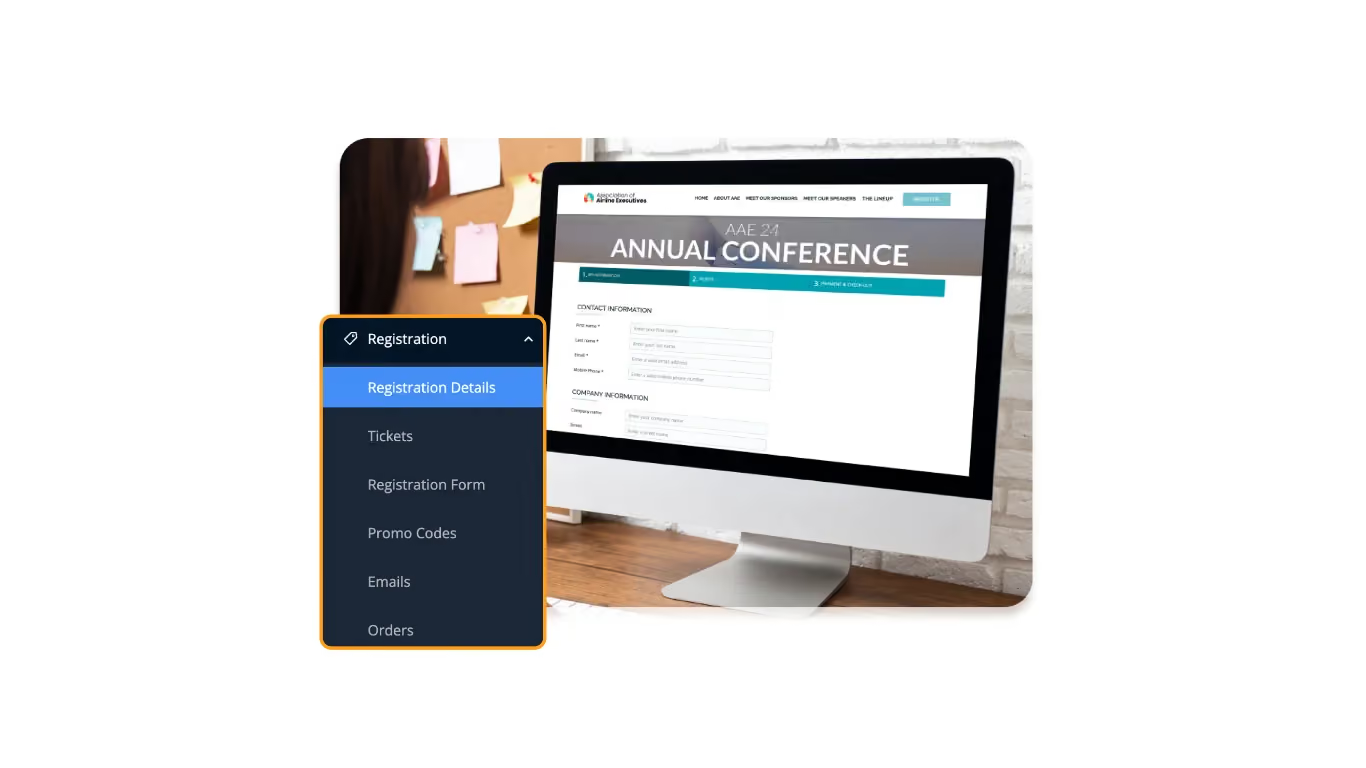
Image credit to EventMobi
EventMobi is a Canadian all-in-one event management platform for in-person, hybrid and virtual events, combining registration, event app, networking and engagement tools in an integrated system. The platform is GDPR-compliant, SOC 2 Type II-certified and audited annually by an independent data protection officer; EU data hosting is available but must be explicitly agreed. With an entry price of approximately €3,500/year and a lack of public pricing transparency, EventMobi is primarily aimed at medium and large organisations willing to commit an appropriate budget for a broad feature set.
Popular features
- Event app
- Agenda management
- Live surveys
- Networking features
- Badge printing
- Sponsor management
Strengths
Broad feature set, strong app component, fast onboarding.
Weaknesses
Limited customisation options, high entry price (from €3,500), no transparent public pricing list, headquarters outside Europe, EU hosting must be explicitly agreed.
Pricing
From approximately EUR 3,500 per year.
9. Swapcard
Rating: ⭐⭐⭐⭐⭐ 4.3/5 (G2)
Summary: Swapcard positions itself as a “revenue-first” platform, primarily targeting trade show organisers, associations and conference organisers who want to demonstrate measurable ROI to exhibitors.
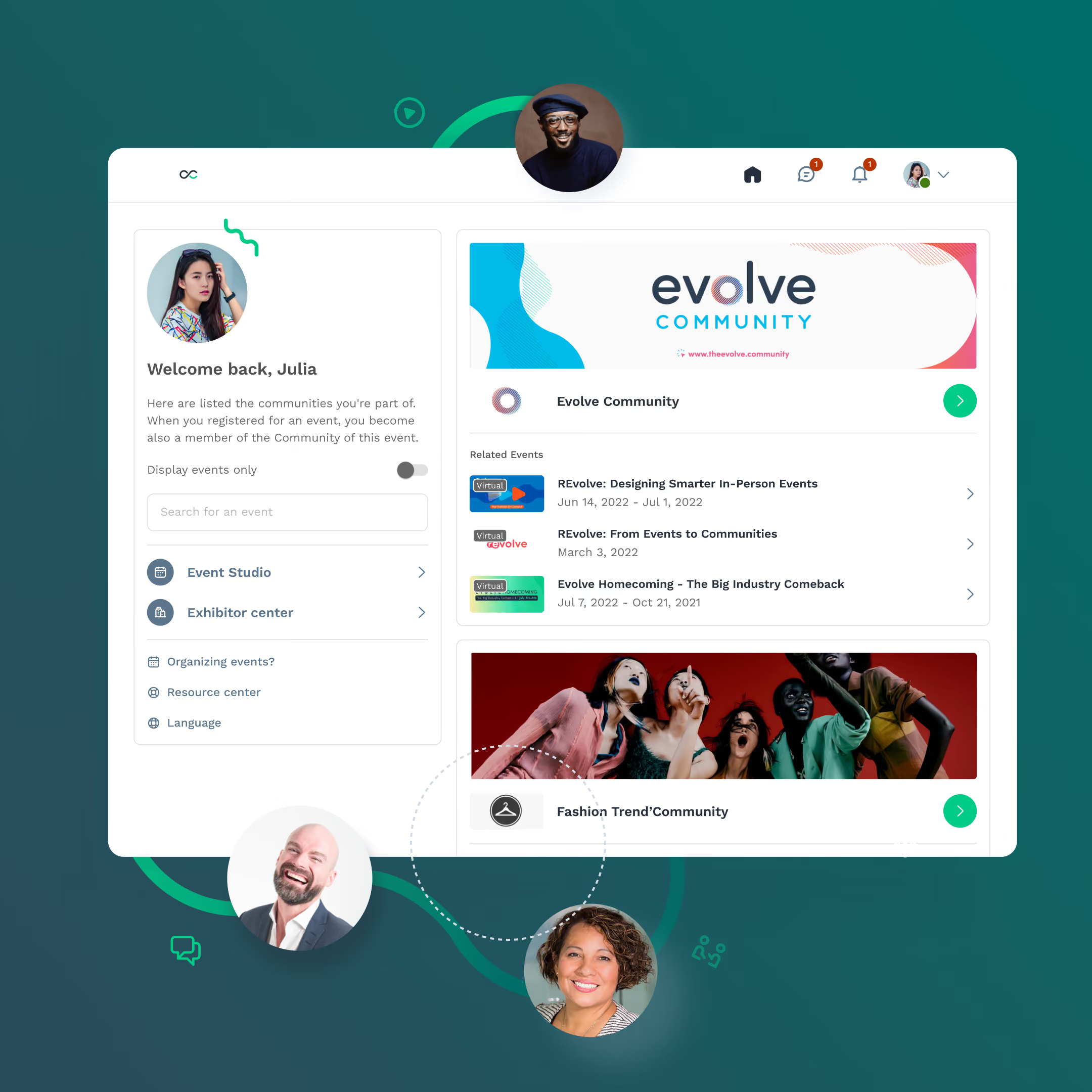
Image credit to Swapcard
Swapcard is a French event management platform headquartered in Paris, specialising since 2013 in connecting attendees, exhibitors and sponsors at B2B events. The platform is ISO 27001:2022-certified, SOC 2 Type II-audited and PCI DSS v4.0-validated, with encrypted data storage (AES-256) and AWS multi-zone hosting. The privacy policy is governed by French law and the GDPR.
Popular features
- AI-powered matchmaking and networking
- Registration and on-site access
- Exhibitor marketplace
- Hosted buyer & smart meetings
- Lead retrieval
- Community management
Strengths
Purely European provider (Paris), high security certifications (ISO 27001:2022, SOC 2 Type II, PCI DSS v4.0), AI models GDPR-compliant and aligned with European data protection requirements, strong focus on exhibitor ROI.
Weaknesses
Non-transparent pricing model, setting up complex floor plans is time-consuming, limited customisation options for the registration page, primarily designed for large B2B events, less suitable for internal or smaller events.
Pricing
Pricing on request; 1 module from USD 610 per year.
10. aanmelder.nl
Rating: ⭐⭐⭐⭐⭐ 4.3/5 (G2)
Summary: aanmelder.nl is primarily aimed at universities, public authorities, hospitals and non-profit organisations with the highest security requirements. The platform excels with strong flexibility in registration flows and a transparent usage-based pricing model. Some users note that certain features require a learning curve.
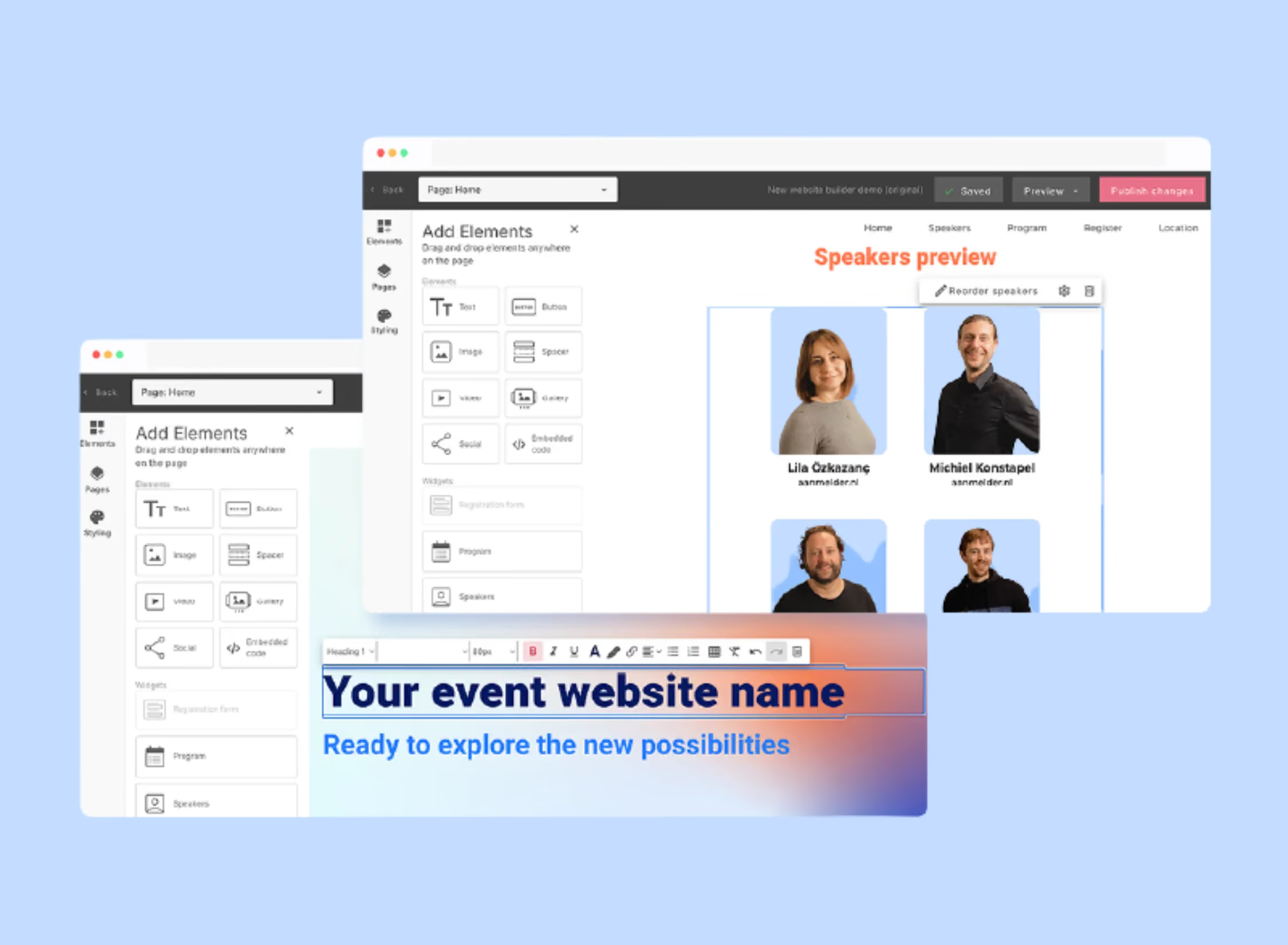
Image credit to Aanmelder.nl
Aanmelder is a Dutch all-in-one event management platform for professional and compliance-critical events, covering the entire event lifecycle: from registration and communication through on-site check-in to post-event reporting. The platform is ISO 27001:2022-certified by DNV, SOC 2-compliant and fully GDPR-compliant with EU data storage.
Popular features
• Individual registration flows with dynamic forms
• Badge printing and mobile check-in
• Abstract handling for academic events
• Event website builder, automated email communication
• CRM and marketing integrations
Strengths
ISO 27001:2022, SOC 2, Privacy-by-Design, EU data storage, ideal for public and academic institutions, transparent usage-based pricing model with no minimum contract.
Weaknesses
Limited customisation, pricing structure comparatively high for smaller events; advanced features require a learning curve; primarily oriented towards Dutch and English-speaking markets.
Pricing
Charged by number of registrations and add-ons used; from EUR 415 for 100 attendees.
Conclusion
As you can see, there is a broad selection of event management tools that support your event planning whilst remaining GDPR-compliant.
You should first examine what requirements your organisation has of a software and which use cases you wish to cover with an event solution. Also check what data protection considerations need to be taken into account when organising events.
Most recommended are all-in-one solutions such as Oniva, which – thanks to high registration logic flexibility and great ease of use – can be configured individually for your organisation and the various use cases. Bear in mind, however, that the choice of the best event management software is individual to each organisation.
Take advantage of the opportunity to test Oniva with a 10-day trial account or request a demo and see for yourself how Oniva can automate your event processes. 👇