.svg)


.svg)


In 2024, around 2.07 million meetings, conferences and events were held in Germany, attracting a total of approximately 378 million participants. Including virtual formats, this figure rises to a total of 2.7 million events with 516 million attendances across all formats (in-person, hybrid and online). In particular, the number of participants per event increased significantly compared to 2022. In 2023, 2.2 million events were recorded with around 311 million participants (source: EVVC).
At Oniva, we expect the number of events to increase further by 2026. From our perspective, the number of physical events in particular will continue to grow, as events can contribute above average to achieving marketing and communication objectives. You can read why we believe events are the more effective marketing format in this article.
The growing number of events means that event organisers need to use the right tools in order to achieve the best possible results in event marketing. A key component of this is the event website.
What is an event website?
An event website is specifically designed to promote and host events. It serves as a central platform to provide participants with all important information about the event and typically includes a direct registration or ticket purchasing option.
Event websites usually offer more than just static information, unlike a standard website – they also include event-specific interactive features. Multimedia content such as images, videos or audio files can be integrated to visually convey the core message of the event.
In short, an event website acts as a central hub to improve efficiency in both event organisation and communication, ultimately ensuring a seamless experience for attendees.
Which information is important for an event website?
The following information is essential for every event website:
- Title & event description
- Event date & time
- Event location
- Contact details of the person or organisation responsible
- Option to register for the event
Depending on the type of event, additional information may also be useful, such as:
- Agenda
- Speakers
- Sponsors
- Attendees
- Directions
- Event materials
- Ticket prices
- Hotel information
Why does your event need its own event website?
A great event website allows attendees to find everything they need—fast—and register with ease. Yet many organisations underestimate its importance, choosing to manage events through their main corporate site. Depending on your event’s size and complexity, this can quickly become inefficient.
Here’s why:
- The average time a user spends on a website is 40–60 seconds (source). Within this brief period, potential attendees should be able to find the key event information and register for the event easily.
- Simultaneous access by several hundred or even thousands of visitors following the dispatch of an event invitation requires the website to have high availability.
- Promoting an event generates a shorter but more intense focus on your organisation. Therefore, a professional external appearance is essential.
- Events often have very specific requirements for registration processes—for example, limiting the number of places, offering special selection options, or managing waiting lists.
- Professional event marketing can only be optimised by collecting specific event-related data.
What are the benefits of having your own event website?
A dedicated event website is essential for professional event planning. Regardless of the event’s size, having a custom event website makes sense for the following reasons:
- As a central online platform, it helps reach a broader audience
- Information can be made available before, during and after the event
- Details such as the agenda or speaker profiles can be accessed at any time, including on mobile devices during the event
- Integrated, simple registration functionality encourages direct conversions
- Creates a professional appearance for your organisation
- Offers interactive features like attendee networking
- Simplifies event sharing
Which tools are suitable for creating an event website?
Professional event software tailored to the unique processes and needs of events is ideal for creating an event website. Alternatively, a content management system (CMS) can be used, offering more design freedom but often with limitations in integrating registration and ticketing functionalities. Learn more in our blog post about the pros and cons of using a CMS for event registration. When high flexibility and special registration logic are required, using an iframe for event registration can be advantageous. In any case, it’s essential to compare the registration requirements with the capabilities of your CMS early on.
What are the most important points for creating an event website?
Responsive design: Make sure that your website is displayed optimally on all devices, especially mobile devices, as many participants will be accessing it during the event.
User-friendly navigation: Design the event website so that important information such as date, location and registration options are easy to find. A clear structure and highlighting of highlights will convince potential participants to register.
Visual branding: A consistent and appealing design strengthens the event branding. Therefore, use consistent colours, images and graphics to convey a professional appearance.
Accessibility and inclusivity: Make sure your website is barrier-free and allows all users, including people with disabilities, to use it without any problems.
Multilingualism: Provide an easy way to change the language setting to appeal to different target groups.
Link to Google Maps: Integrate a link to Google Maps so that participants can easily find the event location.
Dark mode: Also test the website in dark mode to ensure that the content is easy to read.
Optimised loading times: Ensure fast loading times, especially if there is a high increase in traffic during the invitation mailing.
SEO optimisation and social media integration: Improve the visibility of your website by integrating relevant keywords, meta tags and social media buttons.
Is it better to use a standard event website or to have one custom-built?
There are different ways to create your own event website. Broadly speaking, one can distinguish between standard event websites, which are specifically designed to meet event requirements, and custom development of an event website, for example using a content management system (CMS) or even a complete redevelopment. The two approaches can be compared as follows:
The comparison shows that custom development is only suitable for a few events. A typical example where custom development can be worthwhile is a conference or festival that intends to use the event website year-round as a communication and marketing channel.
Top 6 examples of outstanding event websites
Here are six examples of event websites that, in our view, contribute to an excellent event presence:
Siemens Openair 2025 (Oniva customer)
The Siemens Openair 2025 took place on 26 June 2025 and invited employees from all Siemens companies in Switzerland, including apprentices, working students and temporary staff. In a relaxed atmosphere, participants from various business units took the opportunity to exchange ideas and network away from their day-to-day work. The event was all about connection and the sense of community lived and experienced within Siemens Switzerland.
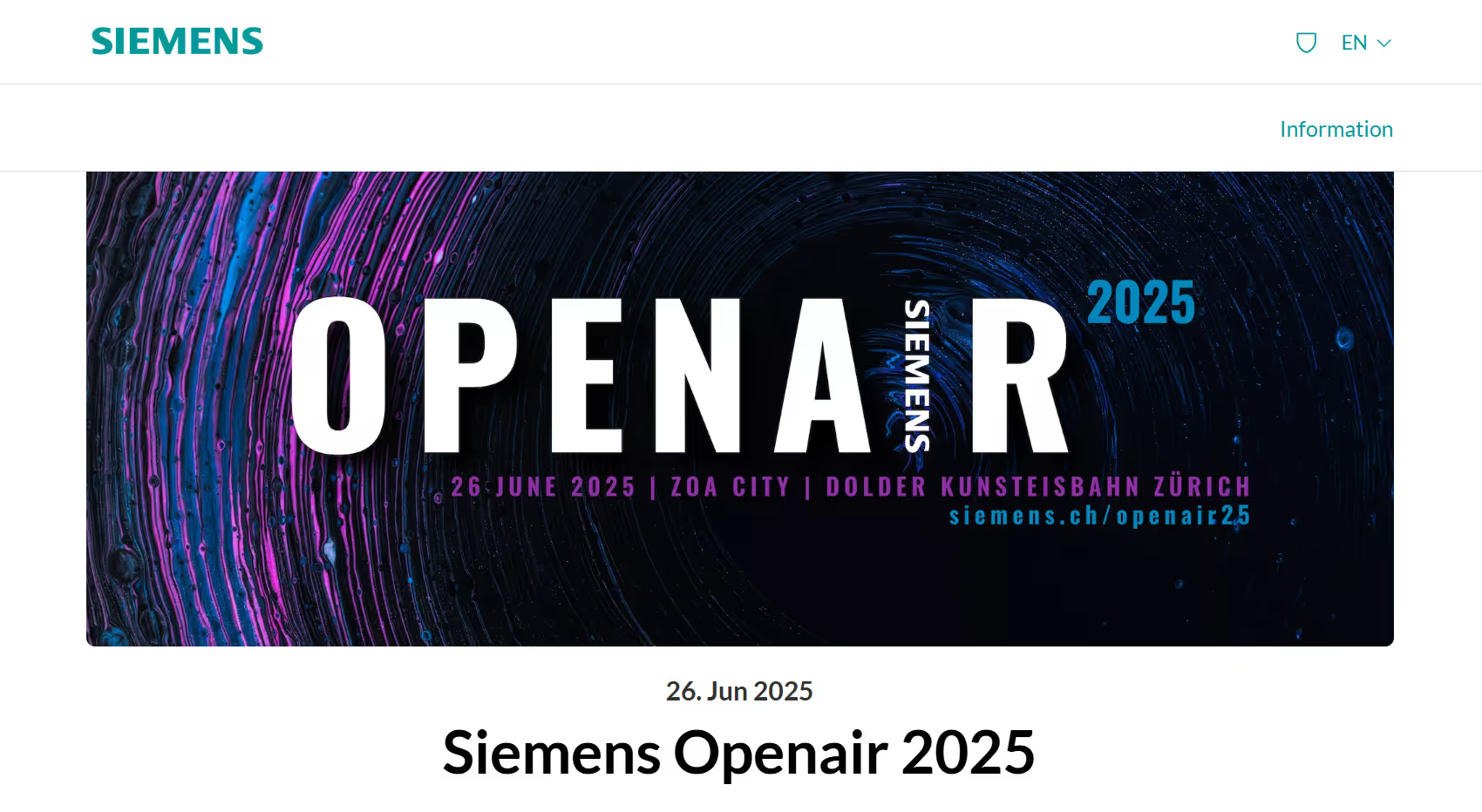
Source: www.oniva.events
Artefact Film Festival
The Artefact Film Festival focuses on artificial intelligence (AI) in film production. Held in Paris and organised by Artefact and mk2, it celebrates films created with generative AI tools. The event website stands out with its modern design, featuring subtle animations that align perfectly with the theme of AI and film.

Source: https://artefact-ai-film-festival.com
Adelaide Film Festival
The Adelaide Film Festival (AFF) is a major Australian film festival held in October and November. Established in 2003, the two-week event takes place in various cinemas across Adelaide. On visiting the event website, gripping film trailers immediately set the tone for the festival. Comprehensive information from previous years and subtle sponsor integration ensure a professional appearance.

Source: https://www.adelaidefilmfestival.org
DMEXCO
DMEXCO (Digital Marketing Expo & Conference) is Europe’s leading event for digital marketing and technology. Held annually in Cologne, it brings together top professionals and innovators from the digital economy, marketing industry, and technology sector. The event website not only provides information about the upcoming event but also offers a VOD library on marketing and technology topics.

Source: https://dmexco.com
Inbound25
Inbound25 is the next edition of the annual INBOUND conference, organised by HubSpot. The three-day event focuses on current trends and strategies in marketing, sales, and AI. Highlights include inspiring keynotes, practical workshops, breakout sessions, product launches, and live demos by HubSpot. The event website provides an extensive overview and additional content from past conferences. The ticket purchase process is well-integrated but could be streamlined further to reduce barriers.

Source: https://www.inbound.com
OMR Festival 2025
The OMR Festival is an annual digital economy event held in Hamburg. The next edition, #OMR25, will take place in May 2025, featuring top speakers from digital business, pop culture, banking, sports, and politics. Highlights include live concerts, networking opportunities, and multiple stages.
The event website excels with its comprehensive information about the festival. Notable features include marking favourite speakers without requiring login and direct contact options for exhibitors, enhancing participant and exhibitor networking.

Source: https://omr.com/en/events/festival/
Conclusion
Creating a successful event website requires consideration of many aspects that can go beyond the capabilities of traditional content management systems. Therefore, using a specific event platform is often the best choice to ensure that your event leaves a lasting impression. You can find out what else you need for a successful event in our guide, which includes a checklist for event planning.
How can Oniva help you create an event website?
Oniva is an event software solution that allows you to create a professional event website in just a few clicks, among many other features:
- Easy creation of a professional event website with no coding required
- Integration of your branding, such as logos, fonts, and colours, with an optional custom domain
- Built-in registration logic with various access options (public, private)
- A central platform for all event information
- Personal event-link login for registered guests to manage their bookings
- Attendee list display
- Mobile optimisation for access at every event stage