.svg)


.svg)



Event management is now part of many roles’ responsibilities
Event management within organisations has evolved significantly in recent years. Events are now used in a wide variety of contexts and are therefore managed by many different roles. The traditional role of the dedicated event manager is increasingly fading into the background and is more often becoming part of a broader set of responsibilities.
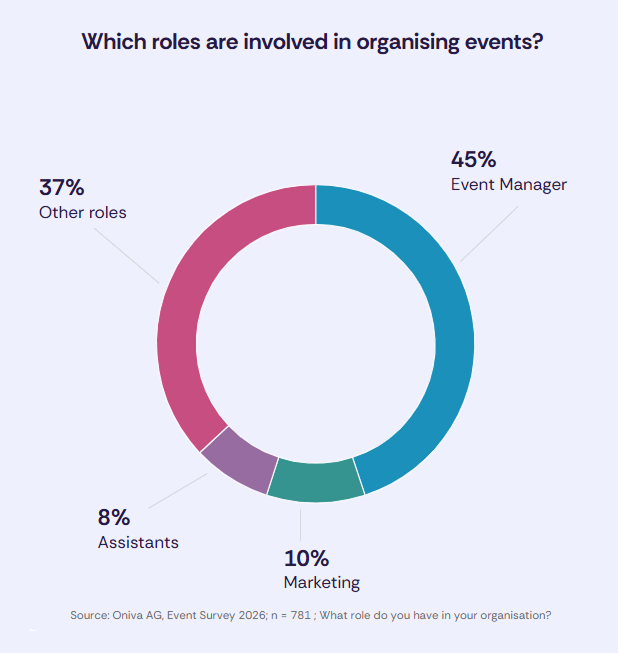
Our survey shows that only 45% of event management is now handled by people with the official job title of Event Manager. 8% is managed by assistants, 10% by marketing teams, and a further 37% is spread across many other functions.
This shift brings new challenges. Employees are taking on event responsibilities alongside their core roles and must develop the necessary expertise, processes and tools accordingly.
A diverse event landscape: Which events dominate within organisations?
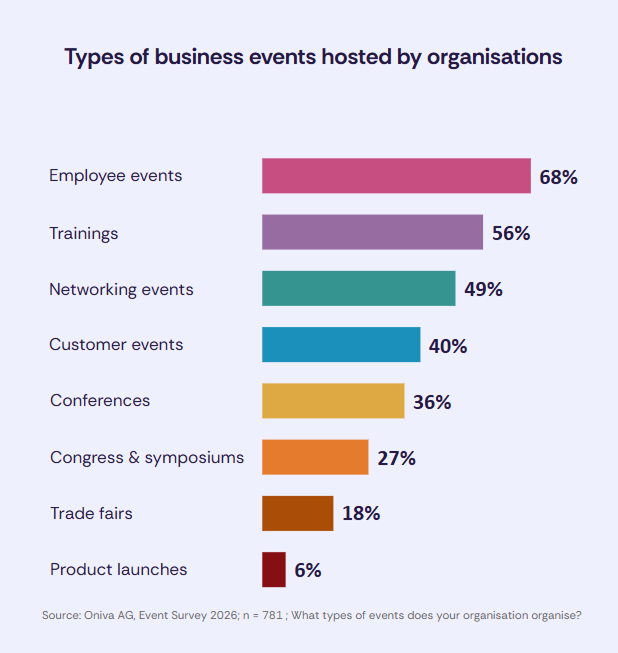
The breakdown of event types reveals a broad and varied event landscape within organisations. Internal employee events account for the largest share at 68%, highlighting the central role of events in strengthening company culture and internal communication. Training and educational events are also widely used, with 56% of respondents organising them.
Networking events follow at 49%, underlining the importance of relationship-building both within and outside organisations. A notable development is the decline in customer events: compared to 2025, their share has dropped by 18%. Possible reasons include tightening budgets and stricter compliance regulations.
Hybrid events did not become the dominant trend format
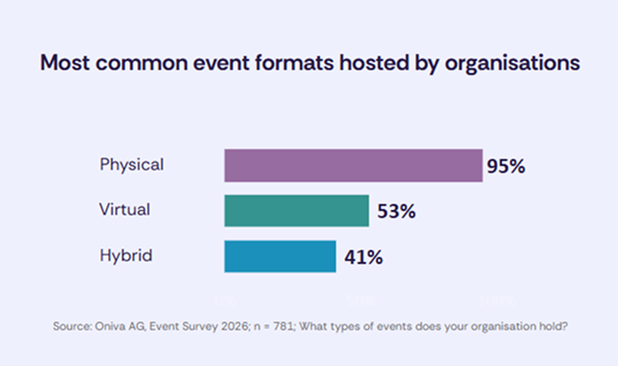
In-person events remain the dominant format by a wide margin, with 95% of organisations continuing to run physical events. Virtual formats have established themselves as a useful complement, while hybrid events have not been able to sustain their initial momentum. Compared to 2025, hybrid events have declined by 5%.
The share of events within total marketing budgets has declined compared to 2025
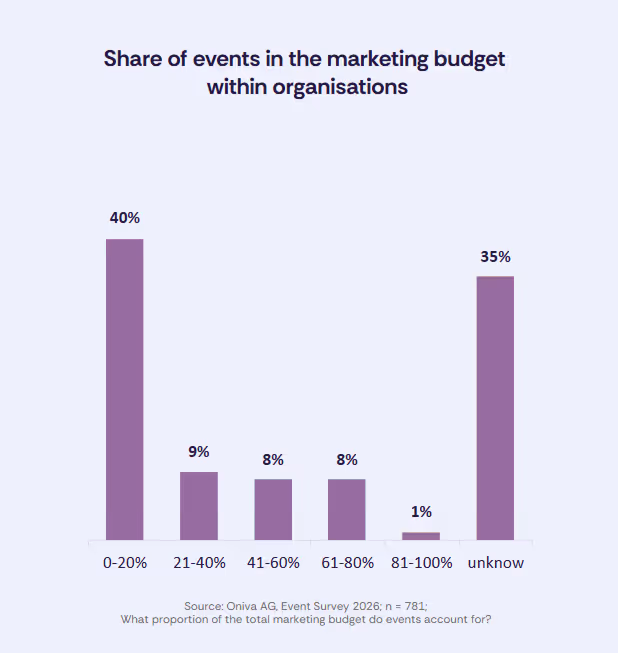
Oniva’s analysis shows that the proportion of marketing budgets allocated to events varies widely across organisations and has declined overall compared to 2025. The 0–20% category has increased by 16%.
The majority of organisations (40%) invest only 0–20% of their marketing budget in events. A further 9% allocate 21–40%, while just 16% dedicate more than 60% of their marketing spend to events.
Notably, around 35% of respondents in 2026 were still unable to specify the share of their marketing budget spent on events. This suggests a lack of transparency or insufficient data tracking in many organisations.
Knowledge sharing, customer & employee engagement, and networking remain key priorities in 2026
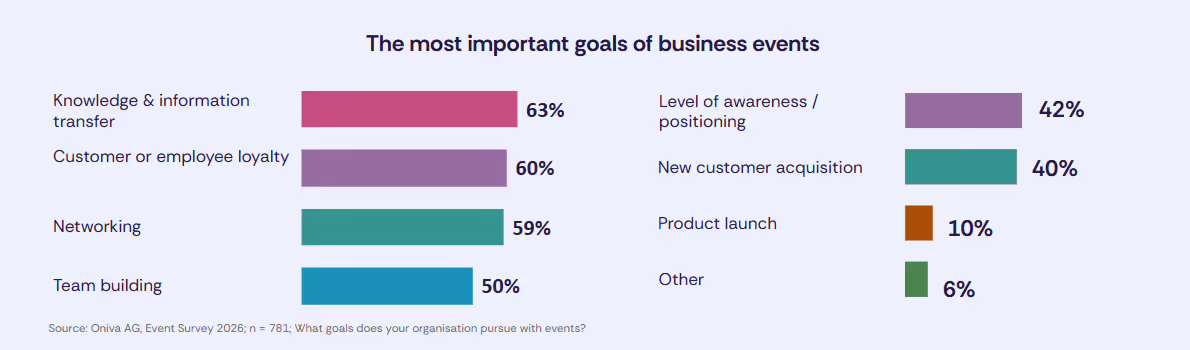
When it comes to event objectives, knowledge and information sharing continues to rank first at 63%. This is closely followed by customer and employee engagement (60%) and networking (59%), clearly showing that personal interaction and relationship-building remain at the heart of events. It is also notable that lead generation has increased by 4% compared to 2025, highlighting the growing importance of events as a business development tool.
Events contribute above average to achieving organisational goals
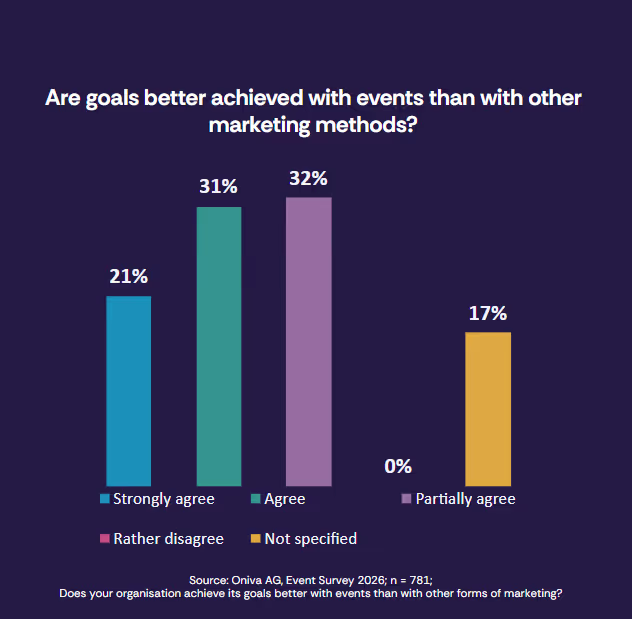
The core results of the 2026 Event Survey confirm that events remain a highly effective channel for many organisations. 52% of respondents state that events help them achieve their goals better than other marketing activities, with 21% strongly agreeing. A further 32% see at least a partial advantage.
Encouragingly, no respondents said that events do not contribute to goal achievement, while 17% were unable to assess the impact.
These findings underline the strategic importance of events as a central element of the marketing mix.
Lack of time and resources has become the biggest challenge in event management
In 2026, 44% of respondents identify time and resource constraints as the biggest challenge in organising events. This may be linked to the significant increase in the number of events held in 2025, as well as shrinking staffing levels driven by economic pressure.

Reliability and trust remain crucial — but price sensitivity is rising
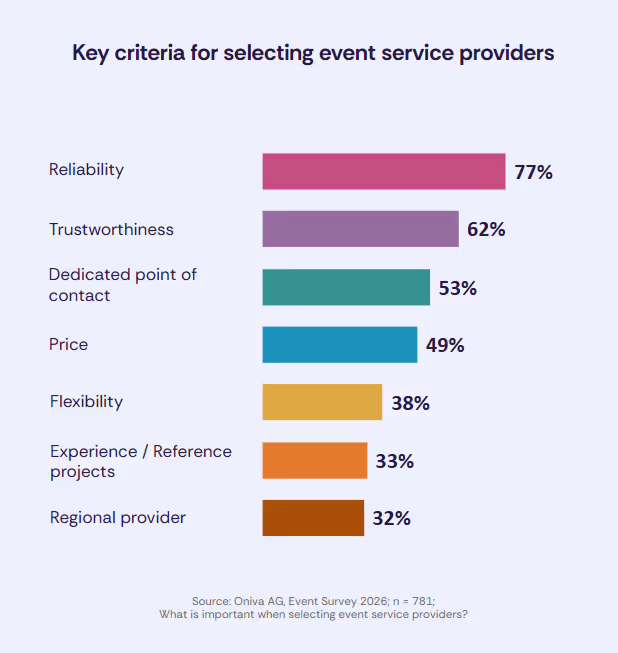
Because events take place at fixed points in time and cannot be repeated in the same way, they require a high level of care and precision. As a result, organisations select their event service providers based on clearly defined criteria.
Unsurprisingly, reliability ranks first at 77%, followed by trustworthiness at 62% and having a dedicated personal contact at 53%. It is also notable that price sensitivity has increased further — rising from 44% in 2025 to 49% in 2026. In 2026, price has become more important than a provider’s flexibility.
Artificial intelligence becomes the most important event trend
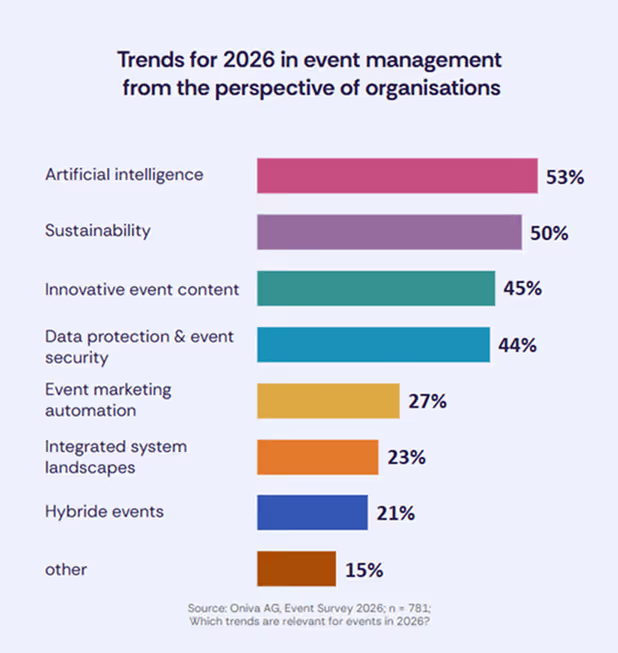
For the first time, artificial intelligence is perceived as the most important trend in event management in 2026. The global technology shift is clearly making its way into the events industry.
Sustainability remains a key theme, reflecting both societal expectations and corporate responsibility to deliver events in a resource-efficient and environmentally conscious way.
Alongside technology and sustainability, innovative event content is also seen as a major trend for 2026. Data protection and event security remain a central concern at 44%. Overall, the results show that the future of events lies in the combination of AI, sustainability, innovative content and strong security standards.
79% of respondents expect the same number or more events in 2026
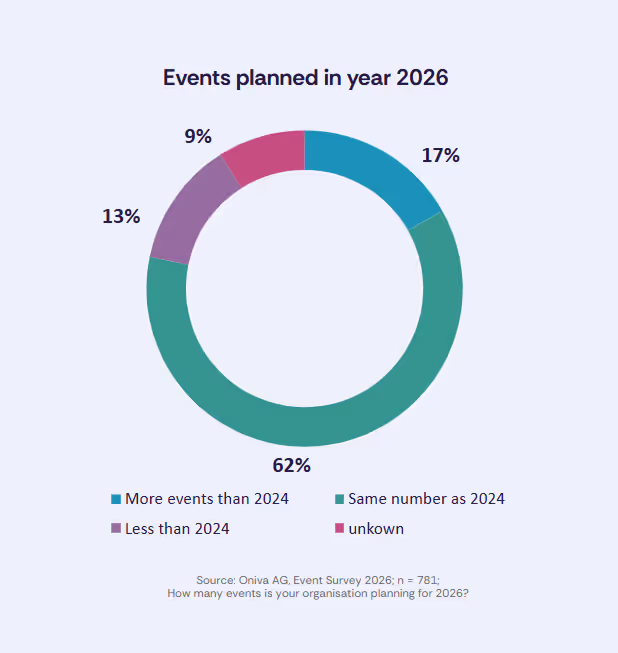
Events continue to enjoy strong momentum. While growth is expected to be less steep than in previous years, 79% of organisations anticipate running the same number of events or even more in 2026.
The results suggest that most organisations are maintaining a stable event strategy. At the same time, the 17% planning more events reflects a positive outlook and the growing relevance of live experiences. The relatively small share planning fewer events (13%) points to specific challenges, budget limitations or increased use of digital alternatives.
Artificial intelligence is expected to support analysis and content creation
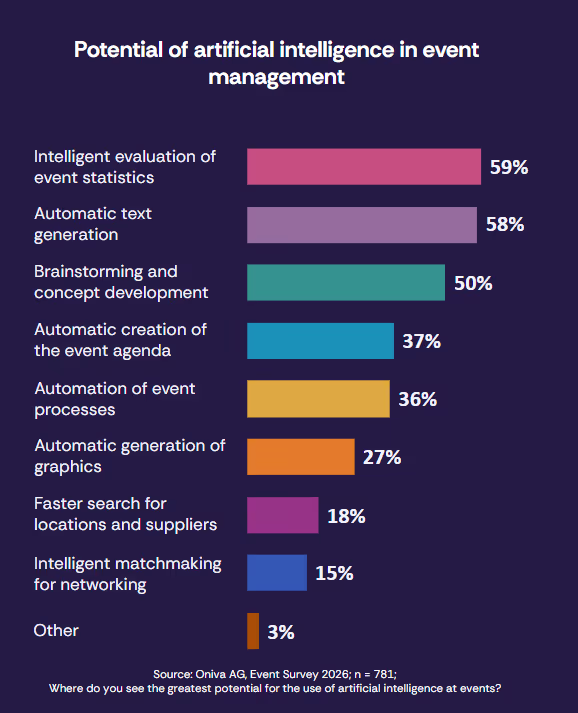
For the first time this year, participants were specifically asked about the potential of AI in the event context. The results show that intelligent analysis of event data and automated text generation are seen as the greatest opportunities.
In addition, 50% of respondents believe AI could support idea generation and the development of event concepts. Overall, the findings indicate that AI has strong potential to reduce current pain points in event management, streamline processes and save valuable time.